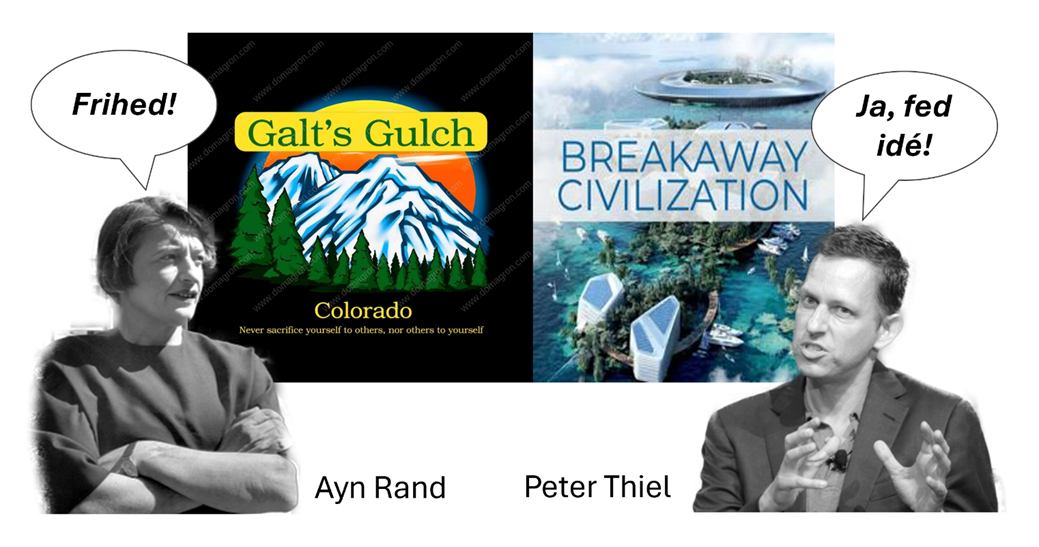
Peter Thiel, Elon Musk, Jeff Bezos, Steve Jobs, Mark Zuckerberg, David Sacks, Marc Andreessen and Larry Page have all declared their admiration for Ayn Rand’s books, which they read at a young age and were inspired by and have since recommended. And what applies to the bosses, of course, also applies to the sub-nerds in Silicon Valley. Vanity Fair magazine even wrote that the long-deceased Ayn Rand is probably “the most influential figure in the industry.”
Elon Musk, who has often shared Rand quotes on social media, has said that he sees similarities between Howard Roark (from Rand’s book The Fountainhead) and John Galt (from Rand’s book Atlas Shrugged) and his own vision as an entrepreneur or ‘builder’, as Rand called his heroes.
And Steve Jobs from Apple has said that the hero of Atlas Shrugged has been one of his “guides in life”. In other words, here we have a key to understanding where the tech billionaires are taking us.
Howard Roark, the hero of The Fountainhead from 1943, (Danish: Only the Strong Are Free), is an innovative architect whose progressive ideas are constantly frustrated by regulations, bureaucratic officials, unimaginative colleagues and mediocre collaborators. So when a developer violates Roark’s integrity and freedom as an architect and allows himself to make changes to his great visionary housing project for the working class poor, he blows up the whole thing with dynamite to the great joy of the readers and is subsequently acquitted in court, to the great satisfaction of the readers.
That was all that was missing.
The moral is clear:
Clear the way for bureaucracy, regulations, and the clutches of unimaginative mediocrity—with dynamite if necessary—and free the innovators from all restraints; only then will society flourish.
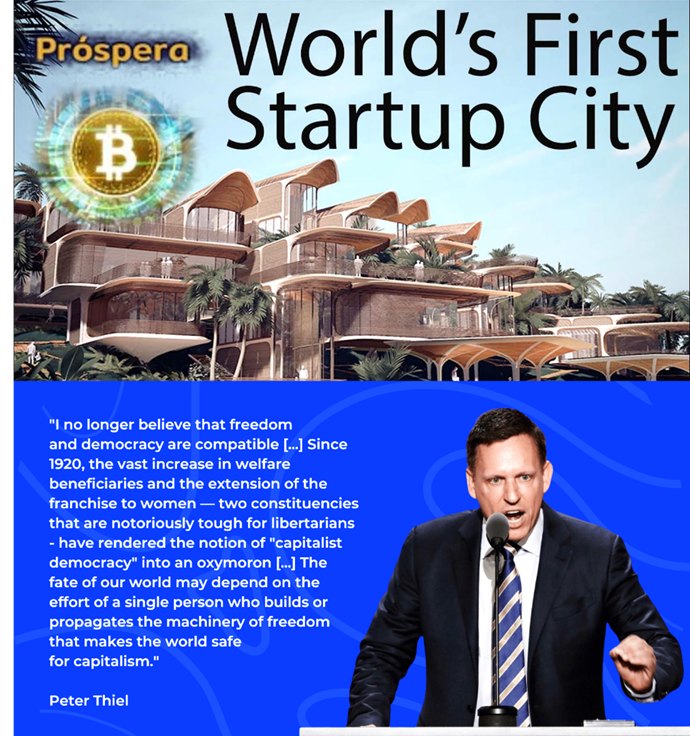
The philosophy is called libertarianism, and even without Howard Roark's example, most tech billionaires would probably be libertarians and insist that their tech companies be freed from all restraints and regulations.
Like fire, capitalism burns best when unleashed.
The tech giants' declared mortal enemy has been the EU Commission, which, led by Competition Commissioner Margrethe Vestager, has for 10 years filed one compensation case after another against Google, Apple, Microsoft, Amazon and Meta for illegal user registration, tax evasion and monopoly formation.
Margrethe's proudest moment was when she was able to send Apple a bill for 100 billion kroner, but after numerous law firms and lobbyists had been by, it was of course annulled by the EU Court of Justice due to lack of sufficient evidence.
But the Commission learned from Vestager's failure and fought back hard by adopting the EU's Digital Markets Act in 2024, which makes it illegal for tech giants to exploit their monopoly position, and the Digital Services Act, which is intended to ensure a safe online environment for consumers and businesses in the EU and, through clear rules, requires tech giants to ensure that EU citizens are not exposed to content, hate speech and disinformation via their platforms and social media.
For good measure, an AI Regulation was adopted at the same time, which is the world's first legislation on artificial intelligence. The regulation, which will enter into force next year, is intended to ensure that AI systems are safe, ethical and reliable before they are unleashed in the European community, and that of course did not make things better.
Clasped and challenged on his freedom by petty bureaucrats in this malignant way, Rand's freedom hero Howard Roark would have reached for his sticks of dynamite, and so did our tech billionaires.
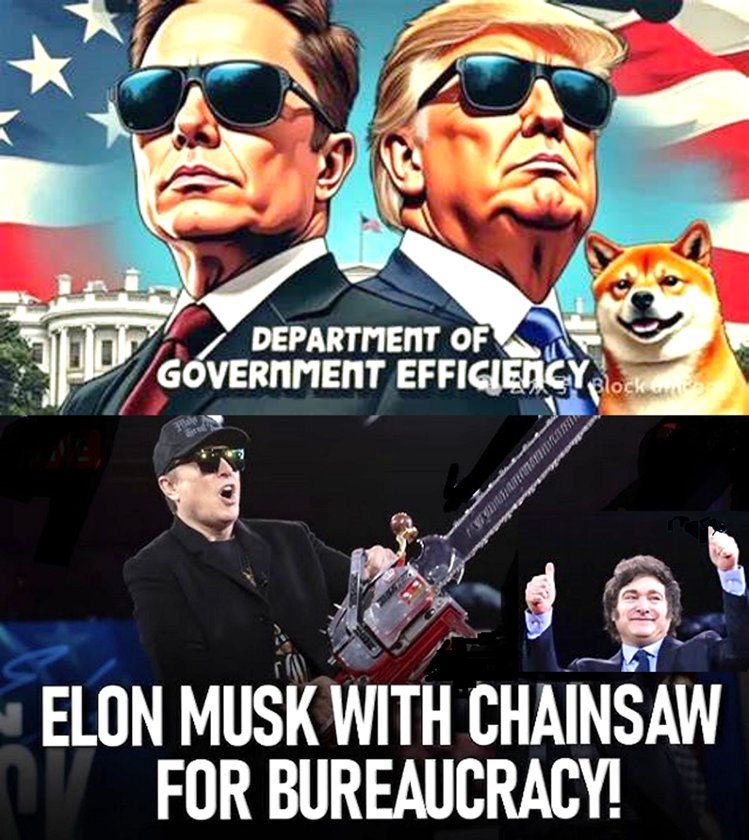
Although most had previously belonged to the losing president's Democratic camp, they quickly rallied behind newly elected Donald Trump, who himself said in an interview that he identified with Howard Roark, whom he called a hero. So the day after his inauguration, Trump declared war on the EU in a memorandum that promised tough punitive tariffs against countries that hindered the global competitiveness of American corporations.
The American tech sector was specifically mentioned as a victim of "overseas blackmail and unfair fines and penalties." And when Vice President Vance was able to lecture Commission President Ursula von der Leyen at an international meeting that European laws were "burdensome international rules" that stifled innovation and created unnecessary obstacles for large American corporations, Howard Roark would have nodded proudly.
But of course there was also regulation at home
 ].
].